
Packrat Midden Mysteries
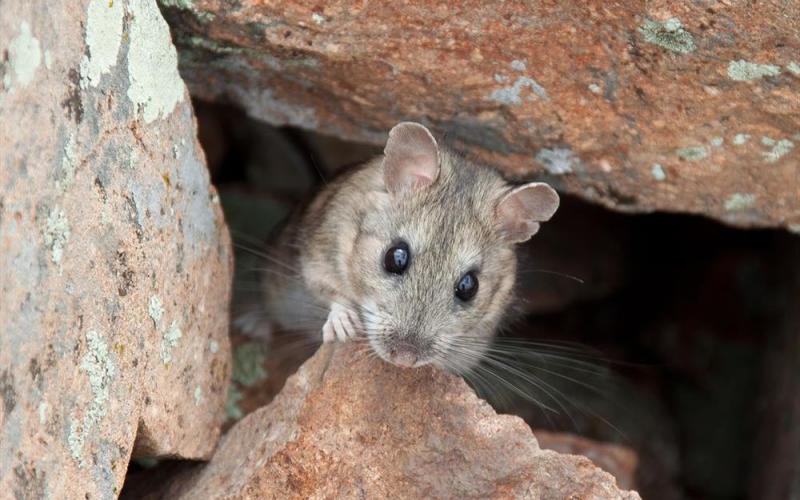
What can a small nocturnal rodent reveal about thousands of years of climate history, ecological change, and desert biodiversity? As it turns out - quite a lot. Please join us on March 24 at 5:30 pm for “Packrat Middens: Uncovering Thousands of Years of Biotic Change in the Great Basin” - the 3rd program in our Great Basin National Park 40th Anniversary virtual speaker series.
Register to Join Us!
Packrats are inconspicuous nocturnal rodents, but their preserved nests have provided significant insight into Great Basin climate and biotic change through time. They are also important species in the desert ecosystem, spreading native seeds, providing microhabitat for invertebrates, and sustenance for carnivores. Though packrats have been well-studied throughout the last half century in this region, scientists continue to uncover the many facets of their biological and ecological significance to mammalian research and beyond.
This program will explore both the ancient and contemporary significance of packrats - highlighting the species’ ecological roles, the scientific breakthroughs made possible through midden analysis, and the ongoing questions that continue to drive research forward.
Our Speaker
Dr. Ally Coconis received an undergraduate degree in biology and a master’s degree in environmental science from the University of Utah before completing her doctorate in ecology from the University of Nevada Reno, where her focus was on woodrats of the Great Basin. Great Basin National Park served as an ideal location to study mechanisms of small mammal distributions due to the large elevational gradient along the southern Snake Range. Dr. Coconis now works at the Santa Barbara Museum of Natural History as the Curator of Mammalogy. She is continuing to study woodrats alongside other small mammals in both California and Nevada.